
No products in the cart.
Moved to the US and Your Hair Feels Different? How Hard Water Affects Your Hair and Scalp
You moved to a new city — maybe from Istanbul to New Jersey, or from Ankara to Texas — and a few weeks later you notice something strange: your hair feels rougher, duller and harder to manage, even though you are using the same products as before. Your shampoo doesn’t lather like it used to, and your scalp may feel tight or flaky.
You are not imagining it. One of the most common reasons is something most people never think about: the water.
What Is Hard Water?
“Hard” water simply means water that contains a higher amount of dissolved minerals — mainly calcium and magnesium. It is safe to drink, but those minerals can leave a thin film on everything they touch: your shower glass, your kettle… and your hair and scalp.
Water hardness varies a lot from place to place. According to U.S. Geological Survey maps, many areas of the United States — including large parts of the Midwest, the Southwest, Texas, Florida and Southern California — have hard or very hard water. So if your hair suddenly behaves differently after a move, your new tap water is a good place to start looking.
Signs Hard Water May Be Affecting Your Hair
- Hair feels dry, straw-like or tangly, especially at the ends
- Hair looks dull and has less shine
- Shampoo doesn’t lather well, so you use more and more
- A waxy or filmy feeling on the hair, even right after washing
- A dry, tight or flaky scalp
- Hair color fades faster or turns brassy
- White, chalky spots on your shower head and glass — a sign of mineral build-up
How to Check Your Water
- Read your local water report. Every U.S. water utility publishes an annual “Consumer Confidence Report.” Search your city name + “water quality report” and look for “hardness.”
- Use test strips. Inexpensive water-hardness test strips are available online and in hardware stores, and give you a result in seconds.
- Try the soap test. Shake a few drops of liquid soap in a bottle of tap water. Little foam and cloudy water usually means hard water.
7 Ways to Protect Your Hair and Scalp From Hard Water
1. Install a shower filter
A simple filtering shower head is one of the easiest upgrades for renters and homeowners alike. Look for filters designed to reduce chlorine and minerals, and replace the cartridge as recommended by the manufacturer.
2. Use a clarifying or chelating shampoo once a week
Clarifying shampoos remove product build-up, and “chelating” shampoos are specifically formulated to help lift mineral deposits. Use one about once a week, then go back to your regular gentle shampoo — using them every day can be too drying.
3. Try a diluted vinegar rinse
Many people like a slightly acidic rinse after shampooing: mix about 1 tablespoon of apple cider vinegar into a cup of water, pour it over your hair, leave for a minute and rinse well. Skip it if your scalp is sensitive or irritated.
4. Never skip conditioner
Hard water can leave the hair cuticle rough. A good conditioner on the lengths and ends helps hair feel smoother and detangle more easily.
5. Finish with cooler water
Very hot water can make your scalp feel drier. Wash with warm water and finish with a cooler rinse.
6. Keep your scalp clean before applying treatments
Mineral and product residue can sit on the scalp. Applying a scalp serum to a clean, dry scalp — rather than over a layer of build-up — helps you get the most out of your routine.
7. Be gentle with heat and styling
If your hair already feels dry from hard water, lower the temperature on your hair dryer and flat iron, and use a heat protectant.
Where a Scalp Serum Fits In
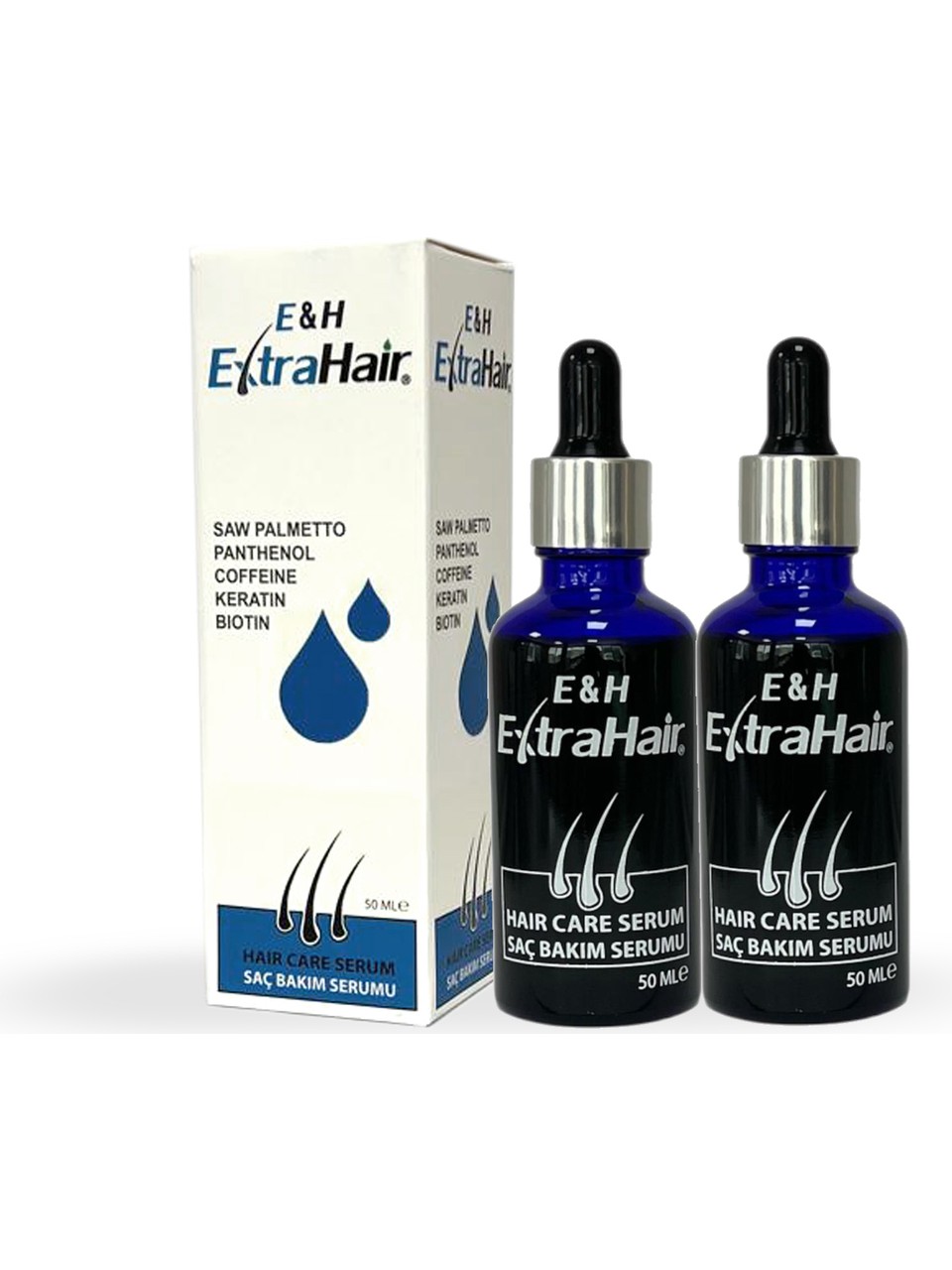
Hard water care is mostly about removing build-up and adding moisture. A daily scalp-care step can complete that routine. Many of our customers apply E&H ExtraHair Hair Care Serum — made in Türkiye with saw palmetto, panthenol, caffeine, keratin and biotin — onto a clean, dry scalp in the morning and evening, followed by a 5–6 minute scalp massage.
New to the routine? Read our step-by-step guide: Morning & Evening Scalp Care Routine, and learn what each ingredient does in our ingredient guide.
Frequently Asked Questions
Does hard water cause hair loss?
Current research has not shown that hard water causes hair loss. It can, however, make hair feel dry and brittle, which may lead to more breakage. If you notice sudden shedding, bald patches, or an itchy, red or painful scalp, please see a dermatologist.
Will a shower filter really make a difference?
Many people notice softer-feeling hair after installing a filter, but results depend on the filter type and on how hard your water is. It is an inexpensive thing to try, especially combined with a weekly clarifying wash.
How long until my hair feels better?
Once you remove the build-up and adjust your routine, many people notice a difference in how their hair feels within a few washes. Be patient and consistent.
Moving to the U.S.? We’ve Got You Covered
Herevya was started by a Turk for Turks living in America — and we know how unsettling it is when even your hair feels “different” in a new country. Our authentic Turkish hair care ships from our New York warehouse, with import duties included and free U.S. shipping on orders of $79+. Choose a single bottle, or save with the 2-Pack or 3-Pack.
This article is for general information only and is not medical advice. E&H ExtraHair is a cosmetic hair care product and is not intended to diagnose, treat, cure, or prevent any disease. Individual results vary.